
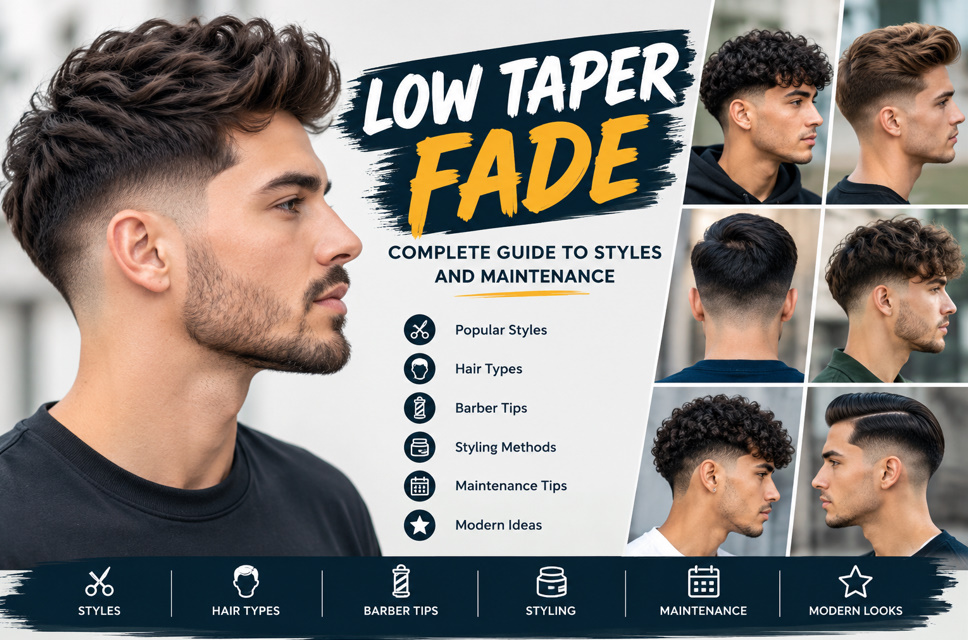
What Is a Low Taper Fade?
A low taper fade is a modern haircut that gradually reduces hair length around the sideburns, ears, and neckline. The transition stays low on the head instead of moving high toward the temples. This creates a clean, subtle finish while preserving more fullness through the sides and top.
The haircut combines a gradual taper with a smooth fade, making it highly adaptable. Straight, wavy, curly, and coily hair can all be styled with a low taper fade. The top can remain short or longer depending on the desired look, while the lower edges receive the defining tapered finish.
- Low fade placement
- Gradual blending
- Clean sideburns
- Tapered neckline
- Fuller side panels
- Flexible top length
- Smooth transition
- Modern haircut
Low Taper Fade vs. Low Fade
Although the names are similar, a low taper fade and a low fade can create noticeably different results. A low taper usually concentrates the shortest hair around the sideburns and neckline, keeping most of the side panels fuller. A low fade generally creates a broader faded section across the lower sides and back.
This distinction is useful when explaining your haircut preferences to a barber. If you want the sides to retain noticeable weight, ask specifically for a low taper. If you want more of the lower sides blended shorter, describe that preference. Since barber terminology can vary, a reference photo can make communication easier.
- Low taper stays compact
- Low fade covers more area
- Taper preserves side weight
- Fade creates stronger contrast
- Both use low placement
- Top remains customizable
- Terminology can vary
- Photos improve clarity
Popular Low Taper Fade Styles
The low taper fade works as a foundation for many hairstyles. Popular combinations include textured crops, curly tops, waves, side parts, fringes, messy styles, and longer brushed-back hair. Because the taper remains low, the hairstyle can retain plenty of character and volume above the ears and across the top.
A textured low taper creates a relaxed appearance, while a side-part version offers a more structured finish. Curly and wavy hairstyles can preserve natural movement while benefiting from cleaner edges. For people who prefer versatility, leaving additional length on top provides more opportunities to change the hairstyle.
- Textured low taper
- Curly low taper
- Wavy low taper
- Low taper crop
- Side-part taper
- Fringe taper
- Messy taper
- Long-top taper
Low Taper Fade for Different Hair Types
One reason the low taper fade is so versatile is that it can accommodate different hair textures. Straight hair can create a smooth, controlled silhouette, while wavy hair provides natural movement. Curly and coily textures can maintain their volume and definition on top while the sideburns and neckline receive a clean taper.
Hair thickness and density also affect the final appearance. Thick hair may need additional weight management, whereas fine hair often benefits from preserving enough length for fullness. A barber can adjust the blending technique according to your natural growth pattern, hair density, texture, and preferred styling routine.
- Straight hair
- Wavy hair
- Curly hair
- Coily hair
- Thick hair
- Fine hair
- Dense hair
- Textured hair
Low Taper Fade for Different Face Shapes
A low taper fade can be customized for many face shapes because the amount of hair removed from the sides is relatively controlled. The haircut can preserve natural width around the sides while allowing the top to be adjusted. This flexibility makes it easier to create a hairstyle that complements your overall proportions.
The top hairstyle can make an important difference. Someone who prefers additional texture or height can style the top differently from someone who wants a short, flat finish. Instead of following strict face-shape rules, consider hair density, natural growth direction, preferred length, and the overall silhouette you want.
- Oval face shape
- Round face shape
- Square face shape
- Long face shape
- Heart face shape
- Adjustable top
- Balanced proportions
- Custom silhouette
How to Ask a Barber for a Low Taper Fade
Clear instructions can help you communicate the haircut you want. Start by saying that you want a low taper around the sideburns and neckline. Then explain how much length you want to keep above the ears. You should also describe your preferred top length and whether you want texture, curls, waves, or a neat finish.
It is useful to discuss how short you want the lowest portion. Some people prefer a softer guarded taper, while others want a much closer finish. If you are uncertain about haircut terminology, bring a reference picture and explain which features you like. This gives the barber a clearer understanding of your desired result.
- Request a low taper
- Mention the sideburns
- Specify the neckline
- Discuss side length
- Explain top length
- Choose the lowest length
- Describe the finish
- Bring a reference image
Low Taper Fade Maintenance and Styling
A low taper fade gradually becomes softer as the hair grows. How often it needs refreshing depends on individual hair growth and how defined you want the edges to remain. Many people maintain the haircut with regular barber visits, while others allow additional growth for a more natural appearance between appointments.
Styling mainly focuses on the hair left longer on top. A lightweight product can add texture or control when needed, while natural curls and waves can be allowed to retain their movement. Straight hair can be brushed, parted, or textured. Keeping the sideburns and neckline tidy helps preserve the haircut’s polished appearance.
- Maintain the neckline
- Refresh sideburns
- Schedule regular trims
- Use suitable products
- Style the top
- Preserve natural texture
- Avoid excess product
- Keep edges neat
Low Taper Fade Ideas for a Modern Look
Modern low taper fade styles often combine precise barbering with natural texture. A textured crop can create a casual appearance, while a curly or wavy top emphasizes natural movement. A fringe can provide a relaxed finish, while a side part or brushed-back style creates a more organized silhouette.
Another advantage is adaptability. The same low taper foundation can work with different top lengths and styling preferences. You can choose a short, low-maintenance hairstyle or retain enough length for multiple looks. The low placement keeps the haircut relatively subtle while still providing clean, contemporary edges.
- Textured crop
- Natural curls
- Loose waves
- Side fringe
- Side part
- Brushed-back top
- Messy texture
- Defined neckline
Things to Consider Before Getting a Low Taper Fade
Before choosing a low taper fade, think about how much contrast you want between the sides and top. A subtle taper preserves more hair around the sides, while a closer finish creates a stronger transition near the edges. Your hair texture and natural growth pattern should also influence the final haircut.
Maintenance is another important consideration. If you prefer a simple grooming routine, choose a top style that works naturally with your hair. If you enjoy experimenting with different hairstyles, keeping additional length on top gives you more flexibility. Discussing these preferences with your barber can help create a personalized low taper fade.
- Choose taper height
- Decide shortest length
- Consider side volume
- Check hair texture
- Select top length
- Consider maintenance
- Discuss neckline shape
- Share hairstyle inspiration